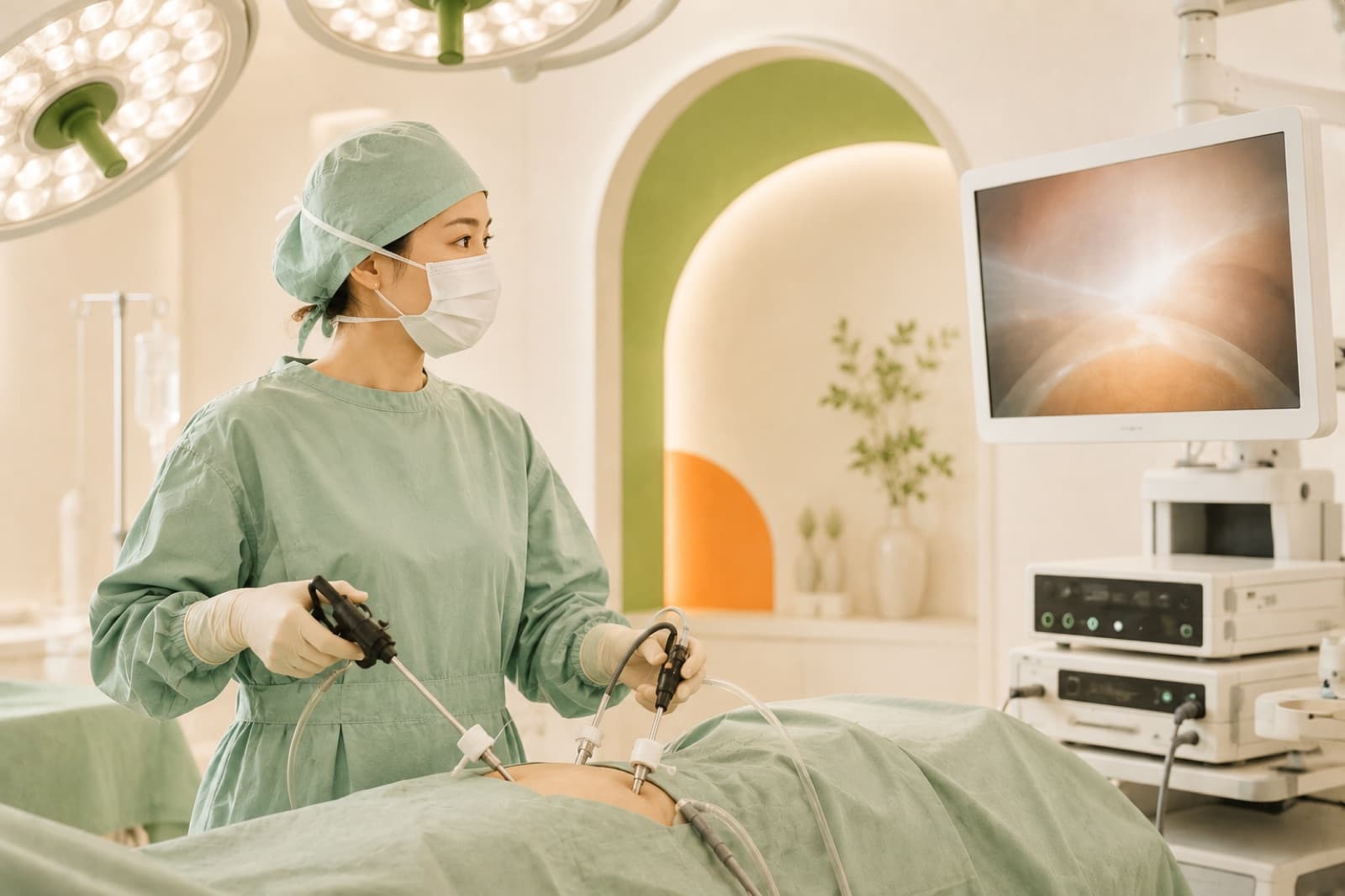
Laparoscopic (“keyhole”) surgery treats gynecologic conditions through a few small incisions instead of one large one. For most women that means less scarring and a gentler recovery than open surgery — and, where it matters, the chance to preserve the uterus and ovaries rather than remove them.
At Yoonho, these operations are led by Dr. Seo Jeong-ho, who has worked in laparoscopic gynecology since the technique was first introduced in Korea in 1989. For an international resident, that experience comes with an English-speaking team that explains the diagnosis, the options, and what each one means before anything is decided.
- In laparoscopic gynecologic surgery since Korea's first cases in 1989
- More than 10,000 laparoscopic cases, with a 0.5% conversion-to-open-surgery rate
- Graduate, Chung-Ang University College of Medicine
- Former Professor of Obstetrics & Gynecology, Chung-Ang University
- Former academic committee member, Korean Society of Gynecologic Endoscopy
Uterine Fibroids
Fibroids are benign growths in the wall of the uterus. About half cause no clear symptoms and are found only during a routine exam, which is why many women first hear about them at a check-up in Korea.
For unmarried women or those who may want to become pregnant, the goal is to remove only the fibroid and repair the uterine wall carefully — reinforced with triple-layered suturing — so that a future pregnancy and delivery are not compromised.
A hysterectomy is considered only in specific situations: when no future pregnancy is planned, when there is a personal or family history of ovarian or uterine cancer, or when a fibroid keeps growing after menopause.
Endometriosis
Endometriosis is when tissue that normally lines the uterus grows outside it, usually within the pelvis. It can cause painful periods, pelvic pain, and lower-back pain, and it is a recognized cause of infertility — so symptoms are worth acting on early.
Medication is often used, but surgery through laparoscopy allows the condition to be both diagnosed and treated directly, which is the more definitive approach.
Adenomyosis
Adenomyosis is when endometrial tissue grows into the muscular wall of the uterus, which can leave the uterus enlarged and firm and cause heavy, painful periods. It often occurs alongside fibroids or endometriosis, so the clinic assesses them together.
Where surgery is appropriate, it is done laparoscopically — and, as with fibroids, the aim is to treat the problem while preserving the uterus wherever that is medically sound.
Ovarian Cysts & Tumors
In women of reproductive age under 45, roughly 90% of ovarian cysts are benign. The priority is to confirm that a cyst is not malignant — and after menopause, an ovarian cyst always warrants a thorough work-up.
Surgery is considered when the cyst causes symptoms or grows quickly. Laparoscopy can remove it through small incisions, and in women who may still want children the operation is planned to preserve ovarian function.
Ectopic Pregnancy
An ectopic pregnancy — one that implants outside the uterus — is a condition the clinic manages laparoscopically. If you have a positive pregnancy test together with pelvic pain or bleeding, it should be assessed without delay.
A preservation-first approach
Wherever it is medically sound, the clinic's aim is conservative surgery — treating the problem while keeping the uterus and ovaries intact. For women who are living in Korea and may still be planning a family, that focus on preserving fertility is central to how each operation is planned.
Common questions
Will I be able to have the consultation in English?
Yes. Yoonho's team supports international patients in English through the consultation, the explanation of your diagnosis, and the decision about treatment. You can reach the clinic on WhatsApp or KakaoTalk to arrange a visit.
Do I need a referral to be seen?
No. In Korea you can visit a women's clinic directly — no referral from a family doctor is required. It helps to bring your Alien Registration Card and, if you have it, your National Health Insurance details.
Will surgery affect my ability to get pregnant later?
For women who may want children, operations are planned to preserve the uterus and ovaries — for example, removing only a fibroid and reinforcing the uterine wall rather than removing the uterus. Your surgeon will explain what is possible in your specific case.
Talk to an English-speaking coordinator
Send a message and we’ll help you book a consultation at Yoonho in Apgujeong.